
- What we do
- Our impact
- The Policy Centre
Pledge your support
Help us represent the SME voice and join us in shaping the sector.
- Research & insights
- Training & funding
- Tools & resources
- Alliance
- Skills Awards
Cybersecurity
For engineering and manufacturing SMEs, cybersecurity is no longer just an IT issue. As more firms connect office systems, production equipment, finance systems, customer portals, supplier links and shared design data, cyber risk becomes part of everyday operations. Explore our quick guide for engineering and manufacturing SMEs.

The importance of cybersecurity
A breach can affect not only emails or laptops, but also production continuity, intellectual property, financial processes, customer confidence and supply-chain access.
That is why, within the Future Skills Hub, Cybersecurity sits alongside Supply chain resilience as part of Digital & Systems Resilience — the digital and operational backbone of modern engineering businesses.

Why cybersecurity matters now
Many SMEs now operate in environments where ERP, finance and email systems, CNC machines, PLCs, automation systems, remote-access tools and customer or supplier data interfaces are increasingly connected. This improves efficiency, but it also increases exposure.
Engineering and manufacturing SMEs are often attractive targets because they may hold valuable intellectual property, rely on a mix of old and new technologies, work with relatively low defensive capacity and provide access into the supply chains of much larger clients.
Remote access arrangements can add another layer of vulnerability, especially where older systems and production uptime pressures make security discipline harder to maintain.
This means cyber risk is no longer just a technical issue. For most SMEs it is a business, operational and commercial issue – practical, rather than abstract.
What the main risks look like
Information Technology (IT) x Operational Technology (OT) convergence
Legacy equipment
Design data and IP
Supply chain expectations
Shared cybersecurity capabilities
Cybersecurity in an SME is not one specialist role
Cybersecurity is a set of shared capabilities across the business, usually spread across leadership, operations and engineering roles rather than sitting in one dedicated cyber function.
These capabilities build on the wider skills and knowledge explored in the enabling & transformational skills area of the Future Skills Hub.
The following capabilities are particularly important in helping SMEs protect their systems, people and operations against evolving cyber threats.

Capabilities that matter most
Cyber risk awareness
IT–OT security understanding
Incident response
Supply chain cyber management
Data protection
Why this matters for growth
Cybersecurity is increasingly becoming part of the price of entry to higher-value markets
Strong cyber capability helps SMEs protect production, safeguard intellectual property, retain customer trust and adopt connected technologies more confidently. It also increasingly shapes the insurance environment around the business.
The review notes highlight that insurers now commonly expect measures such as multi-factor authentication, regular backups, patching, incident response planning, endpoint protection and staff awareness training. In many sectors, cybersecurity is no longer only about protection. It is about commercial credibility and operational insurability.

Practical steps for SMEs
1. Identify what matters most
2. Strengthen basic cyber hygiene
3. Review IT–OT connections
4. Use cyber essentials as a baseline
5. Prepare for incidents
6. Build workforce awareness
7. Use available support
Summary
For engineering and manufacturing SMEs, cybersecurity is no longer optional and no longer separate from day-to-day operations.
It is part of how firms protect production, manage financial and operational risk, maintain customer trust, satisfy insurers and participate in increasingly digital supply chains.
SMEs that take a practical, proportionate approach to cybersecurity will be better placed to operate with confidence in a more connected industrial environment.
The Future Skills Hub is here to help firms move from basic awareness to practical cyber resilience.

Explore next

Supply chain resilience
Cyber risk often extends beyond your own systems. Explore how supplier dependencies, shared data and third-party platforms affect wider business resilience.
Read more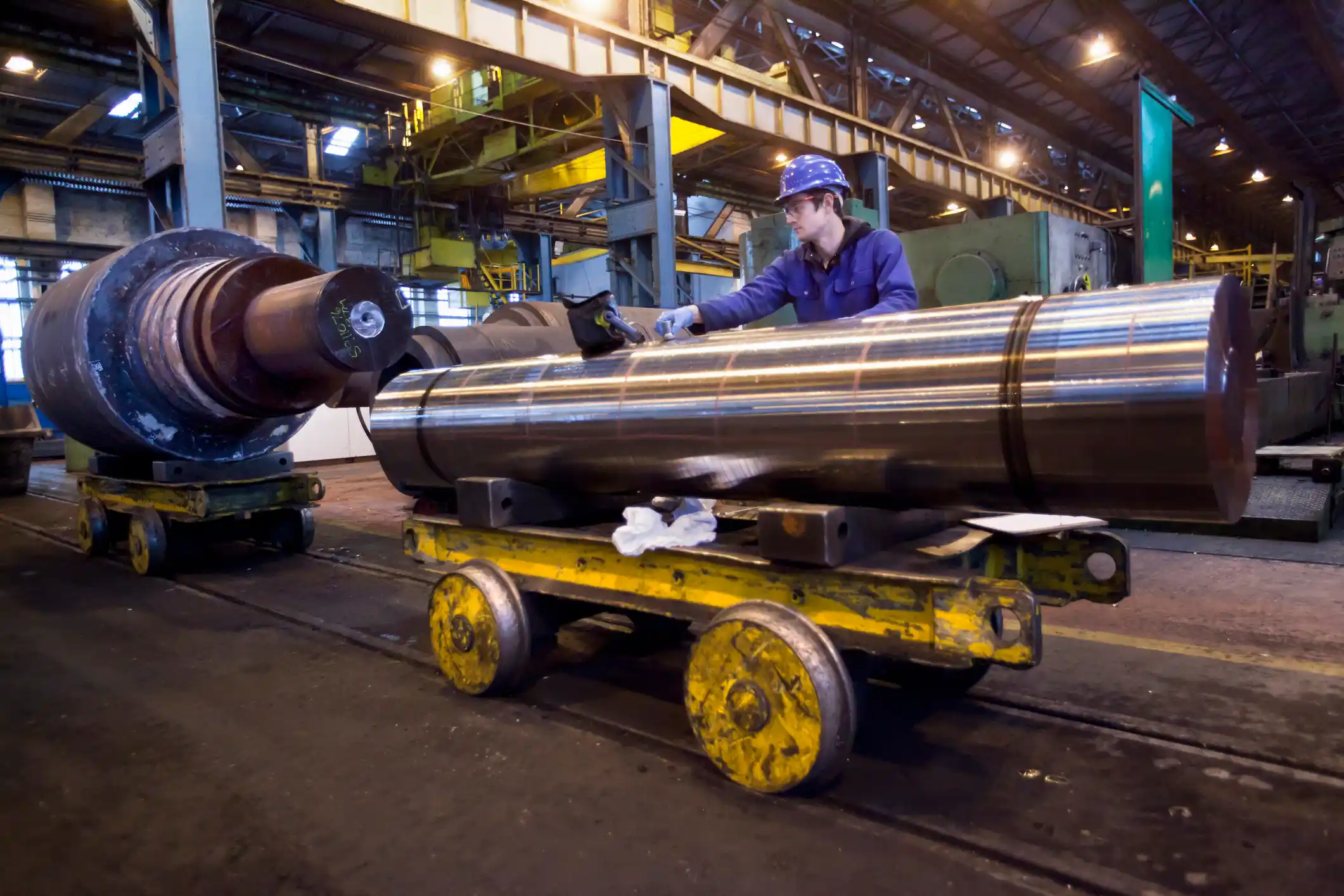
Retrofit & remanufacturing
Connecting or digitising legacy equipment? Consider the cyber implications of linking older machinery to modern networks and control systems.
Read more
Defence & emerging technologies
Targeting defence or other high-integrity markets? Explore the additional requirements around secure manufacturing, information assurance and trusted supply chains.
Read moreShape the Future Skills Hub
Your expertise and insights are invaluable. If you have content, resources, or feedback to enhance the Future Skills Hub, we want to hear from you! Let’s collaborate and shape the future of engineering and manufacturing.
Get in touch